

Estimated reading time: 5 minutes
Don’t feel like reading? Then simply listen to this article.
Anticipation for summer and all its pleasant sides is slowly building. Especially after an uncomfortable period of cold and wet weather, sunshine feels great. But intense summer sun can also bring a number of problems—especially when temperatures rise suddenly. This is not only stressful for us humans, but can also cause lasting damage to our calves.
Before the start of life
Heat stress in the mother cow already has a negative impact on the embryo and fetus. Further development is then affected by a lower birth weight. Not only is the immunoglobulin content in the colostrum reduced, but the calf’s ability to absorb IgG is also weakened, meaning it takes in fewer of these important helpers. The result: a weakened immune system—right from day one. In addition, changes in tissue structures can occur, which may lead to difficulties later in life.
The first weeks
Even if the effects of heat on calves are not directly measurable—unlike in lactating cows, where it is reflected in milk yield—excessively high temperatures and humidity over a longer period can harm the young animals. From the third week of life, temperatures above 21°C already mean stress—especially when humidity is high. Much of the energy is then used to regulate body temperature instead of supporting healthy growth. Feed intake of solid feed usually decreases as well, in order to keep metabolic heat production as low as possible. The immune system is also downregulated, and susceptibility to disease increases further. In the worst case, this combination can even lead to the loss of the animal.
Delayed development
Due to this shift in energy use, growth is delayed. Developmental deficits may occur—and these can no longer be compensated for later. One example: cell growth through cell division takes place only within the first 50 days of life. A lack of energy during this phase ultimately means fewer udder cells and therefore reduced performance later on. If the calf also becomes ill, the entire organism is weakened and a downward spiral begins.
Taking action
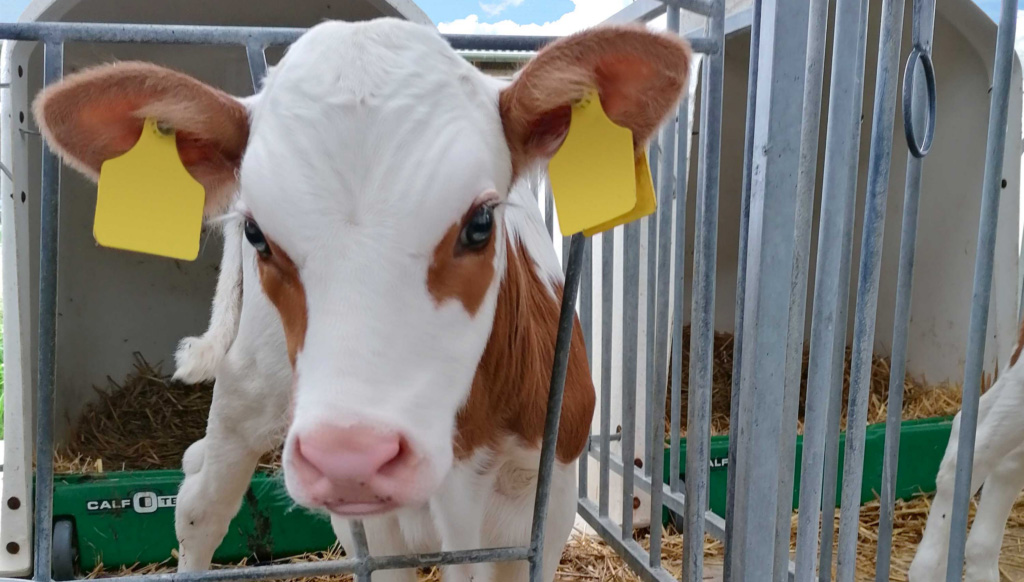
We cannot change the weather, but there are several ways to ease the situation and support the calves. Direct sunlight heats up calf hutches, so they should be placed in the shade whenever possible. Continuous air exchange through ventilation openings can also provide relief. Standard hutches can, for example, be slightly raised at the back to create a gap for airflow. Additional stress factors such as vaccinations or dehorning should be avoided on very hot days if possible.
Annoying little pests
With higher temperatures come flies—in large numbers. They are not only extremely irritating, but can also transmit diseases. This can have serious consequences, especially for already weakened calves. The airflow mentioned above helps to counteract them. Changing the bedding can also help: sand can be used instead of straw. It is less attractive to flies while still providing a soft lying surface. In addition, sand dissipates body heat better than straw. Drinking buckets and feed bowls should be cleaned at least once a day. Feed residues are also attractive to flies, increasing the risk of disease transmission in these areas.
(Not) a magic potion
Keyword: water. Yes, even for the youngest calves. A lot of it is lost through increased sweating and breathing and must be replenished. On particularly hot days, milk alone is not sufficient—especially with restricted feeding. Regular access to fresh water and clean bowls is essential, as germs and bacteria thrive in warm water. Those feeding milk replacer can also slightly increase the concentration. This provides more energy to the calf, helping it better cope with these stress factors. Increasing energy via concentrate feed is not recommended, as this can quickly lead to rumen acidosis.
Challenges
The weather is changing, and we notice it in many areas. All we can do is adapt. Weather extremes—regardless of the season—present particular challenges. Good preparation for all eventualities helps to face them more calmly and ultimately avoid extra work. The top priority is to keep the microbial load as low as possible, since the immune system is the first to suffer in heat, putting the already vulnerable calf at even greater risk.