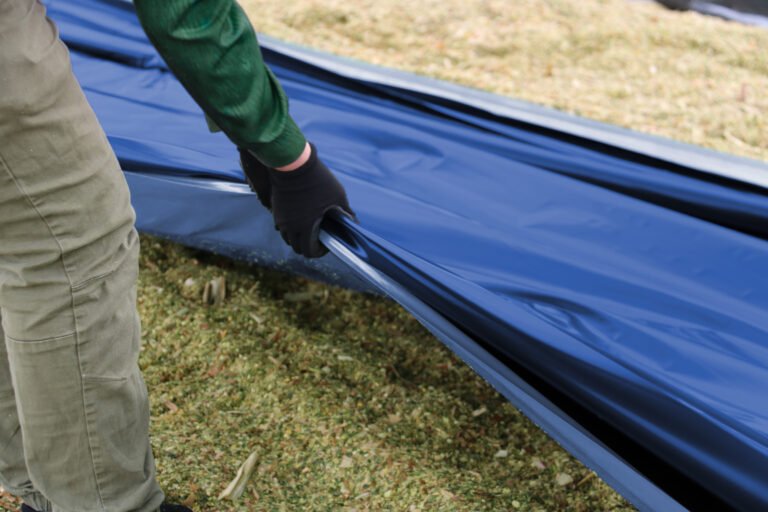


How to sustainably improve your silage quality
The right covering of your silo plays a crucial role in determining the quality of your silage. A barrier film—also known as an oxygen barrier film—ensures that oxygen is kept out almost completely. The result: less spoilage, more stable fermentation processes, and significantly better feed quality.
Why is a barrier film so important?
Conventional PE films allow comparatively large amounts of oxygen to pass through. This promotes the growth of yeasts and molds. Barrier films, on the other hand, reduce oxygen permeability many times over and create optimal conditions for ensiling.
The most important advantages at a glance:
- Higher feed quality: Less oxygen means lower nutrient losses and better aerobic stability
- Less mold & yeasts: The growth of unwanted microorganisms is effectively suppressed
- Optimized fermentation process: Anaerobic conditions promote rapid lactic acid fermentation, lower the pH value, and preserve valuable nutrients
- Greater cost-effectiveness: Less spoilage saves costs and increases feed value
- Time savings: Barrier films often replace additional underlay films, as they can adapt to the silage surface
- Robust & durable: UV-resistant and tear-resistant
Effective protection against oxygen
Barrier films are often made of special materials such as EVOH layers that almost completely block oxygen ingress. This significantly reduces the activity of harmful microorganisms (yeasts, fungi, bacteria), allowing the silage to remain stable and high-quality for longer.
Example: OXY MAX 90 barrier film
A particularly high-performance product is the OXY MAX 90 barrier film. It reduces oxygen supply to less than 0.5 cm³ per m² per day – a decisive factor for successful ensiling.
What OXY MAX 90 offers you:
- Rapid pH reduction through intensive lactic acid fermentation
- Reduced levels of yeasts and molds
- Inhibition of putrefactive bacteria as well as Aceto- and Enterobacter
- Cooler silage surface and lower energy losses
- Less waste and labor due to spoiled silage
- UV-stable on both sides for up to 18 months
Thanks to these properties, your silage not only remains preserved for longer, but also stays rich in nutrients and hygienically sound.
Conclusion: An investment that pays off
The use of a barrier film is one of the most effective measures for improving silage quality. It protects against oxygen, reduces losses, and ensures a stable fermentation process. Especially with rising feed costs, this is a clear economic advantage.
Tip:
For a barrier film to develop its full effect, correct application is crucial. Despite its high density, it is more sensitive than conventional silo films and should therefore be additionally protected.
What you should pay attention to:
- Protection with fleece: (silage fleece) prevents damage from weather and animals, better protection through double-sided heat treatment
- Proper placement: The film should always be laid loosely so that it can lie tightly against the uneven silage surface and air channels are avoided
- Fixing with silage bags: Transverse barriers made of silage bags ensure secure sealing and prevent air ingress
- Proper placement: The film should lie tightly against the silage surface to avoid air pockets
Only in combination with sufficient protection can the barrier film fully realize its potential and protect the silage in the long term.