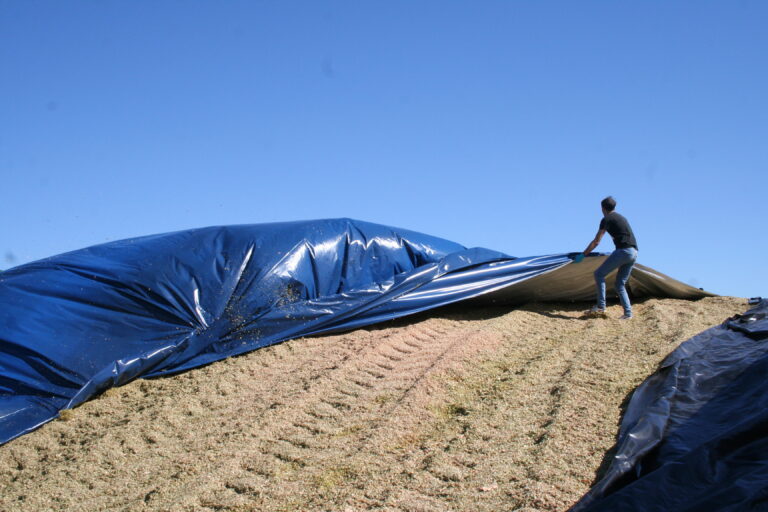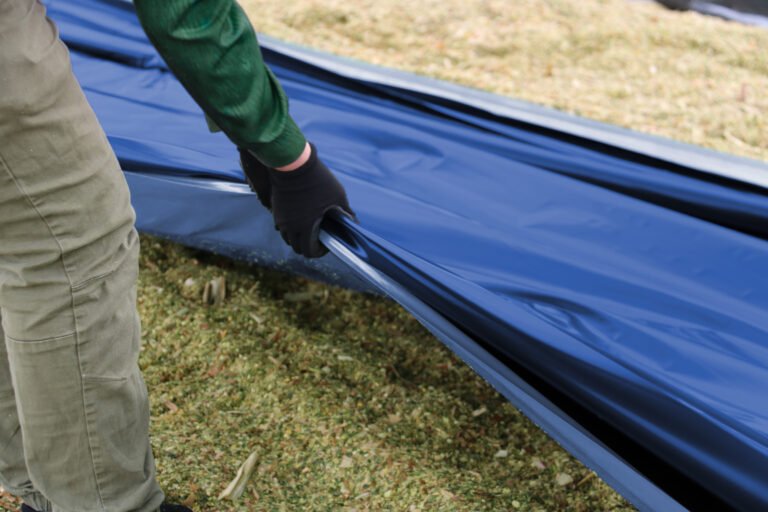


Storage conditions determine which microorganisms develop and how fermentation will proceed. The absence of oxygen and the presence of available sugar provide a good basis for the desired fermenting microorganisms. This allows them to quickly lower the pH, deactivate harmful microorganisms present in the silage, and preserve nutrients.
Anaerobic environment
To achieve this with minimal losses, a strongly anaerobic environment must be ensured. This can be supported by:
- Use of SiloSolve® FC silage additive, which consumes oxygen and stabilizes fermentation
- Immediate covering of the silo after the last compaction run
- Use of films with high gas tightness and mechanical resistance such as our OXY MAX
- Protection against mechanical damage to the film with a protection grid – or fleece + protection grid in areas with high bird or animal pressure
- For sealing and securing the film, use only silage bags and cross barriers (every 4–6 m), no tires
And now the task during storage:
- Continuous monitoring of the cover until the end of silage feeding, so that damage can be repaired quickly and silage quality is maintained (on a silo without tires, this is much easier!).

From practical experience, we can show how strong the effect of a cover with continuous cross barriers made of silage bags is on the quality of the silage surface (see photo). Placing cross barriers divides the silo surface into many “small silos”. This means that even if the cover is locally damaged, high-quality, feedable silage can still be found after the next cross barrier. In addition, continuous oxygen entry from the feed-out face between the silage film and the ensiled material is prevented.
Cross barriers can also be added at any time after harvest on the silo. The more effort is put into harvesting and covering, the less growth of unwanted yeasts, moulds, and bacteria will occur. This benefits not only the herd in the barn, but also the person removing the silage, as it reduces workload. And let’s be honest: nobody grows maize just to throw the silage away later. The less spoilage, the better.