What happens if you don’t place cross barriers on the silo?
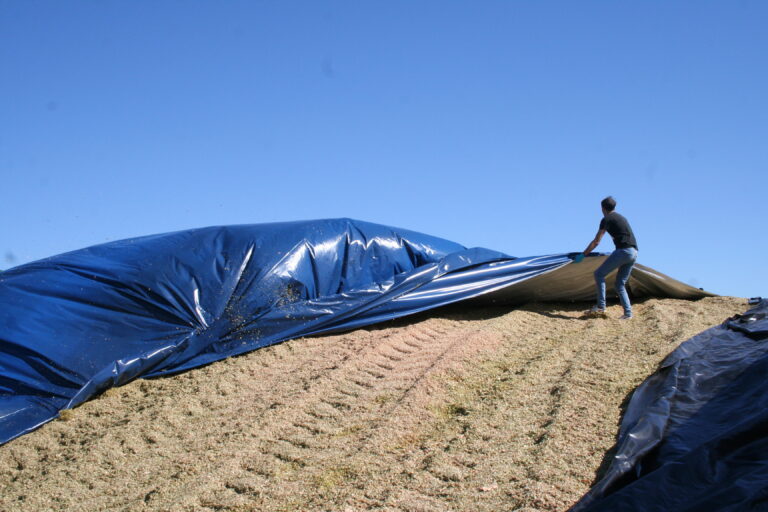
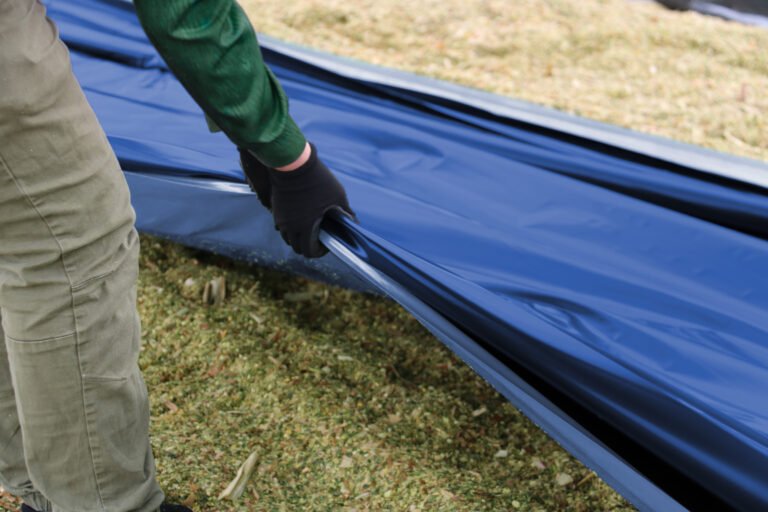
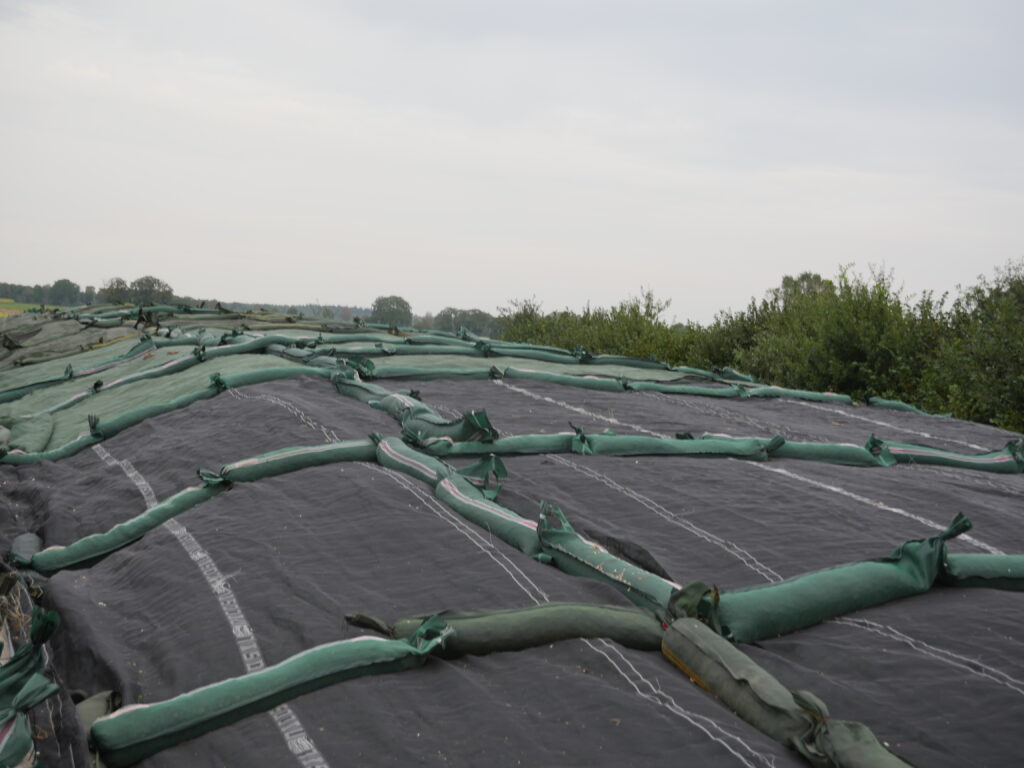
Cross barriers are made from silage bags that are laid across the silo to divide it into individual sections. This helps prevent oxygen from entering underneath the cover film and ensures an airtight seal for the silage once the silo is opened.
What happens if you don’t place cross barriers on the silo?
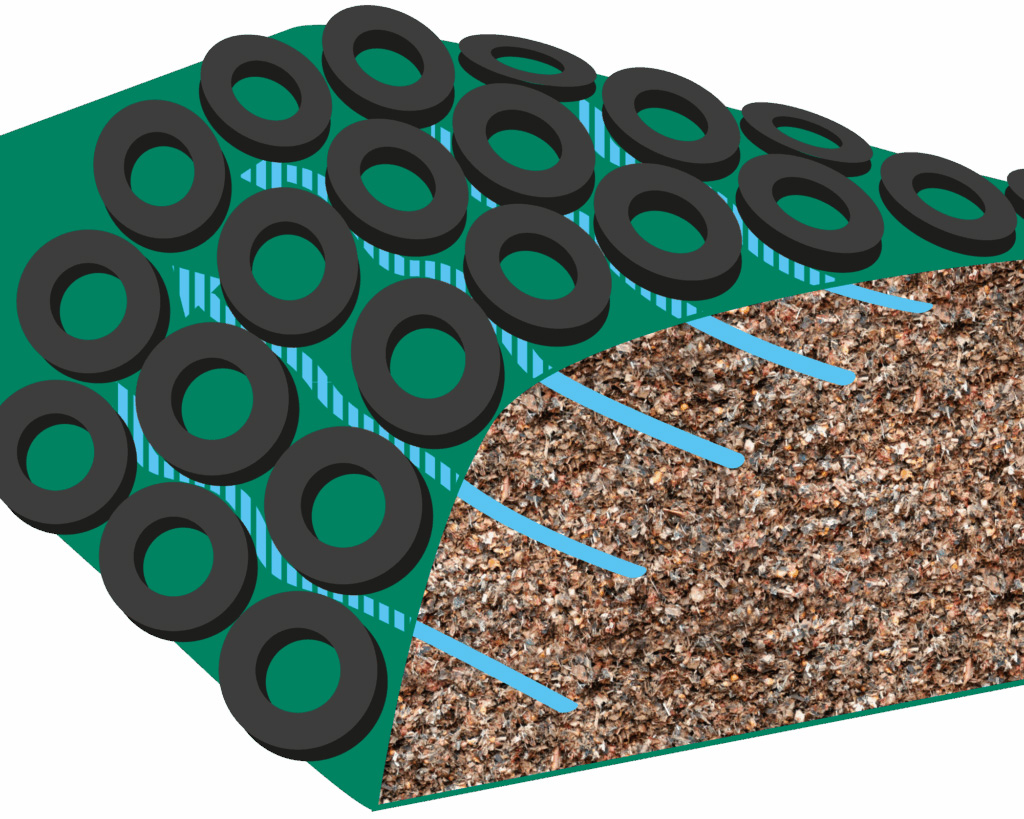
Traditional silo covering with tyres or occasional silage bags may fix the protection grid and film in place, but it does not create a continuous barrier against incoming air. As a result, valuable nutrients are lost. An incomplete barrier is not only a problem after opening the silo. Even small holes in the film allow oxygen to enter the silage. Even spreading tyres across the entire silo does not really help. There are always air channels between tyres – in the worst case they connect across the whole silo. Oxygen always finds its way through small gaps and enables bacteria, yeasts and moulds to grow in the upper layer (the top 30–50 cm).
That is why barriers should be used!
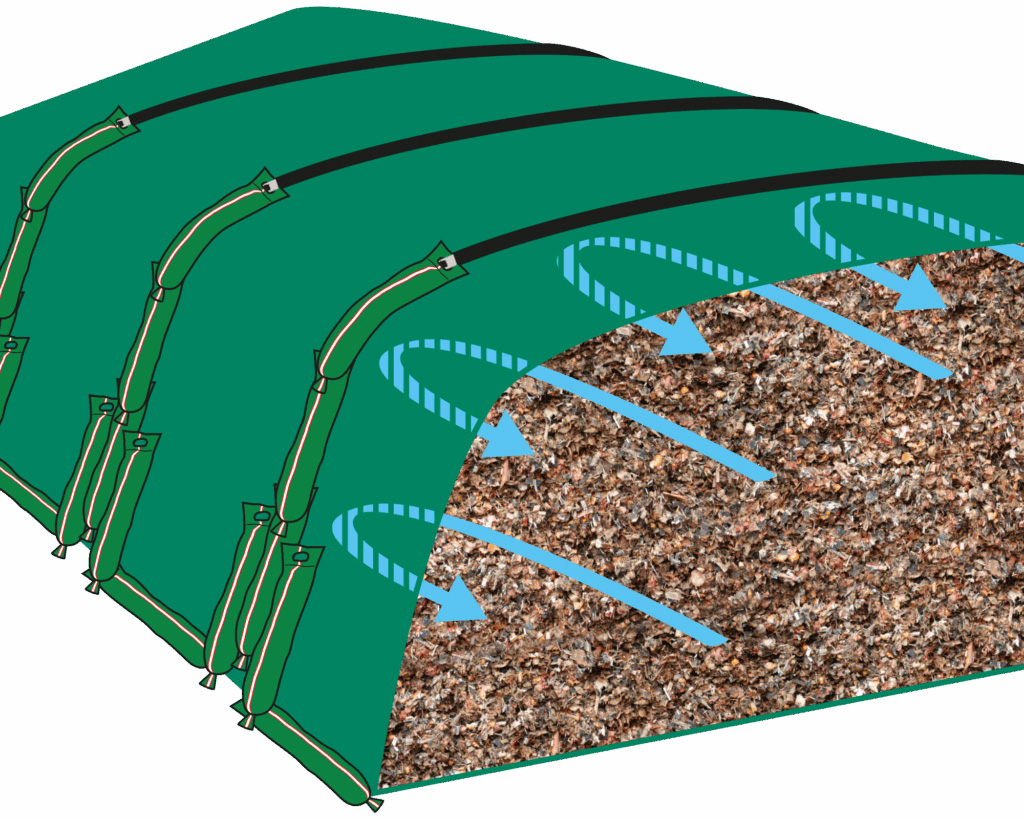
The ideal solution is cross barriers made of silage bags filled with gravel. The bags can be placed tightly next to each other to form an airtight cross barrier so that no oxygen can travel from the exposed face underneath the film to the back of the silo. Without cross barriers, you could just as well skip the more expensive barrier film.
Silosäcke sind einfach zu handhaben, flexibel einsetzbar und können über mehrere Jahre hinweg wiederverwendet werden.
We recommend placing a cross barrier every 3–5 metres so that oxygen can only reach up to the next barrier. This effectively limits air penetration. Even if unnoticed holes occur in the middle of the silo, this prevents large-scale oxygen spread under the film. We have recommended this for several years now, and the experience of thousands of farmers confirms it.
Cross barriers secure silage quality!
Cross barriers can also be added after harvest without any problems. The more carefully the silo is filled and covered, the less opportunity unwanted yeasts, moulds and bacteria have to develop. This benefits not only animal health but also makes feed-out much easier. After all, feed is not grown to end up being thrown away – the less spoilage, the better!
Airtight covering: Cross barriers, often in the form of silage bags or sandbags, reduce oxygen entry into the silage mass once the silo is opened.
How are cross barriers applied exactly?
Cross barriers are placed at regular intervals (e.g. every 3–5 metres) across the silo. They are especially important where silage film or protection net overlaps.
That is why barriers matter!
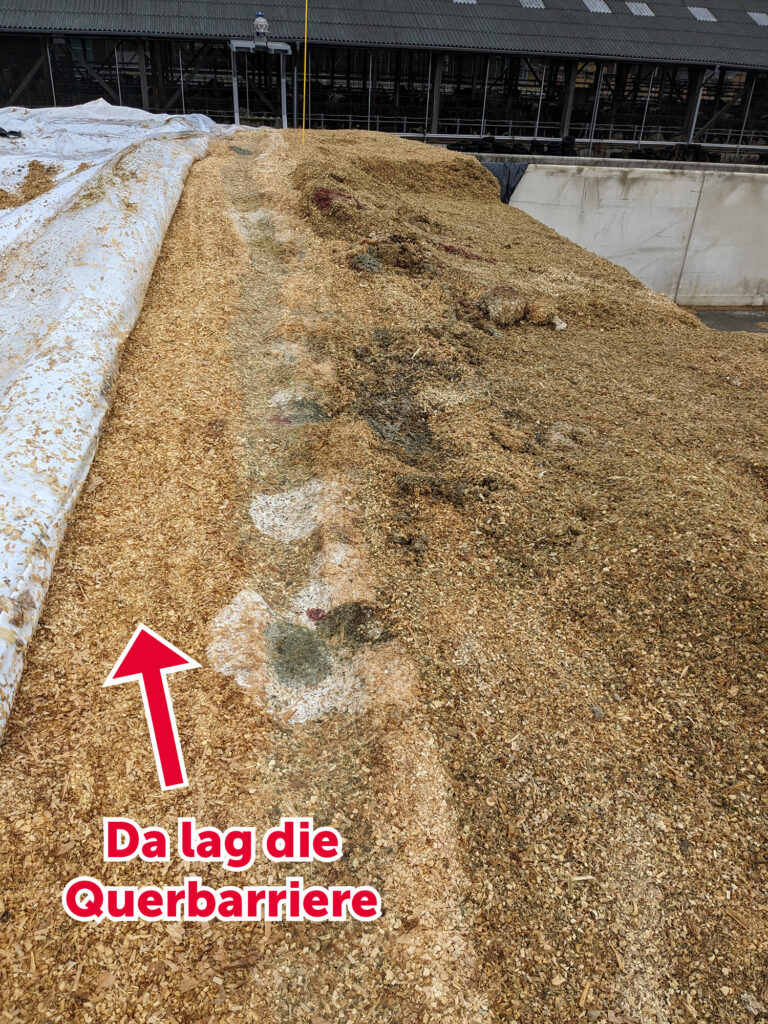
It is clearly visible how positively a continuous cross barrier system affects the quality of the silage surface. By installing cross barriers, the silo surface is divided into several “small silos”. This means that even if damage occurs to the cover, the silage behind the next barrier remains fully usable and high quality. In addition, large-scale and continuous oxygen entry between the film and the silage is prevented. Click here to go to the product range!
Cross barriers also exist in the form of hoses that hold silage bags on slopes or at the sides. Cross barriers also exist in the form of hoses that hold silage bags on slopes or at the sides. This barrier hose is laid every 3–5 meters together with the cross barriers. The advantage: on slopes where individual silage bags would slip, the hose stays in position. It is placed over the silo and filled with silage bags on the slopes. When uncovering the silo, work up to the hose, leave it as a barrier at the exposed face, and remove it completely during the next covering process.
jbs
Wir von jbs verkaufen Spezial-Betriebsmittel für landwirtschaftliche Betriebe. Das sind z. B. Erntekunststoffe, verschiedene Futtermittelzusätze, Siliermittel, Hygieneprodukte und Zusatzstoffe für Biogasanlagen. Unsere ca. 100 Mitarbeiter betreuen Endverbraucher und Händler aus Deutschland, Österreich, Polen, Tschechien, der Slowakei und Benelux – in ihrer jeweiligen Muttersprache. Und wir beliefern Partner in ca. 30 weiteren Ländern.
Stay up to date with product innovations, practical tips, and behind-the-scenes insights from jbs. On our social media channels, we report directly from real agriculture – straight from the field, the barn, and our customers.
Sign up for our newsletter and stay informed about news and offers.
By registering, I authorize joachim behrens scheessel GmbH to regularly send me information, offers, and updates. I also agree to the General Terms and Conditions and the Privacy Policy. I can revoke my consent at any time.
You are currently viewing a placeholder content from Vimeo. To access the actual content, click the button below. Please note that doing so will share data with third-party providers.
You are currently viewing a placeholder content from YouTube. To access the actual content, click the button below. Please note that doing so will share data with third-party providers.



 Cross barriers also exist in the form of