

Estimated reading time: 5 minutes
Don’t feel like reading? Then simply listen to this article.
A net is not just a net
Fishing net, hair net, shopping net, communication network, power grid, … there are many kinds of nets, and in principle most of them describe a structure that can be used for a wide variety of purposes. The physically existing nets are generally stable due to their interwoven structure, which can vary depending on the application, and are intended to hold things in some way. In a figurative sense, this also applies to the invisible ones, such as the communication network – although that is certainly open to debate.
Nets in agriculture
Whether straw, hay, haylage, or silage, many use a round bale net to wrap the pressed bale. They are stable and withstand the pressure of the compressed material. This stability is achieved through the material – polyethylene – in combination with the weaving pattern. The net consists of so-called warp threads and weft threads, which are interwoven in a specific pattern.
Warp threads = the thicker ones, they keep the bale in shape
Weft threads = the thinner ones, they run between the warp threads and keep them in position
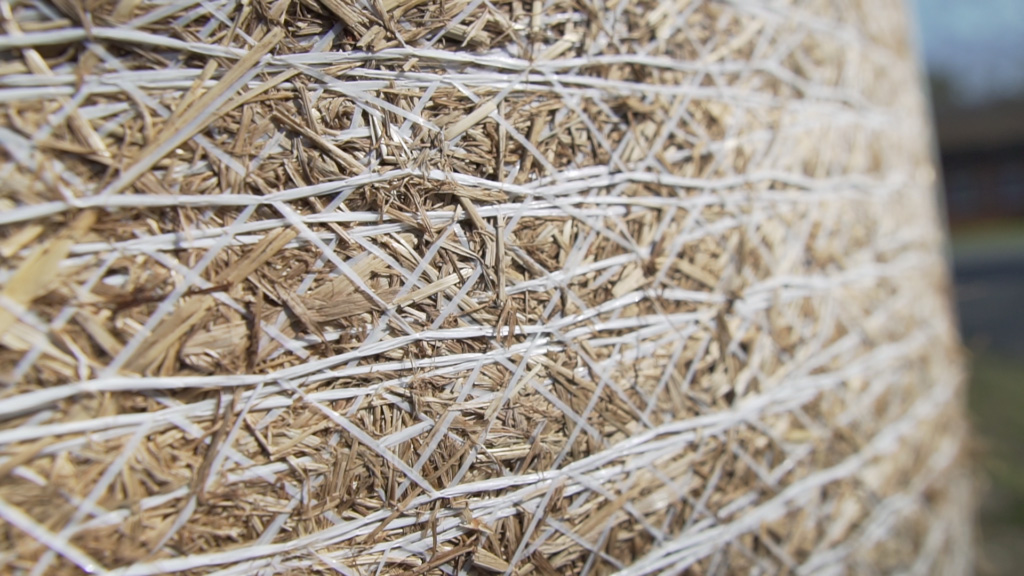
Clearly visible here: the warp threads run horizontally around the bale, while the weft threads hold them together diagonally.
Stability
The net itself is therefore durable and, in the case of wrapped bales, is additionally protected by film. However, for straw and hay it forms the outer layer, and depending on storage, a certain amount of care is required. Straw and hay have specific storage conditions to maintain their quality. Hay should be able to “breathe” and is best kept under a roof. During transport and storage, care should be taken to keep the net intact – it cannot withstand the force of large machines. Straw, on the other hand, can be stored well under high-quality fleece. Even though fleece is known as a soft material, there are a few things to consider here.
Hard fleece
Cover fleece is not as soft as, for example, the fleece fabric used for clothing – after all, it has to withstand various environmental conditions. If it is not sufficiently secured on the bale, strong friction can occur due to wind. Over time, this friction can abrade the individual threads of the bale nets – which in turn leads to instability of the entire structure. First the thinner weft threads break, and then the warp threads are affected as well. In the worst case, such a process goes unnoticed over a longer period and only becomes apparent when the bales are needed and the fleece is removed. When the bale falls apart, it is particularly frustrating.
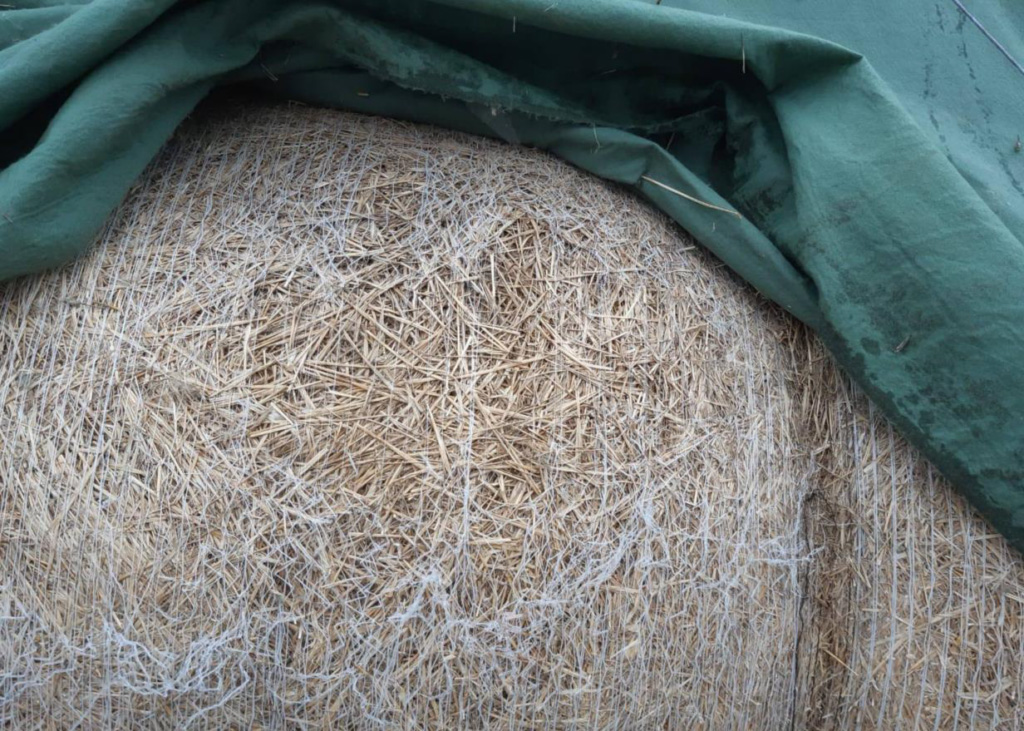
By the way: the same thing can also happen with twine – even though it is somewhat thicker than the nets.
Fixing helps
Properly securing the fleece can minimize friction and thus protect both the bales and your wallet. Those who do the groundwork properly here save themselves a lot of trouble. Even a small but important difference can be made by our silo-safeline, which is easy to install and keeps everything in place.
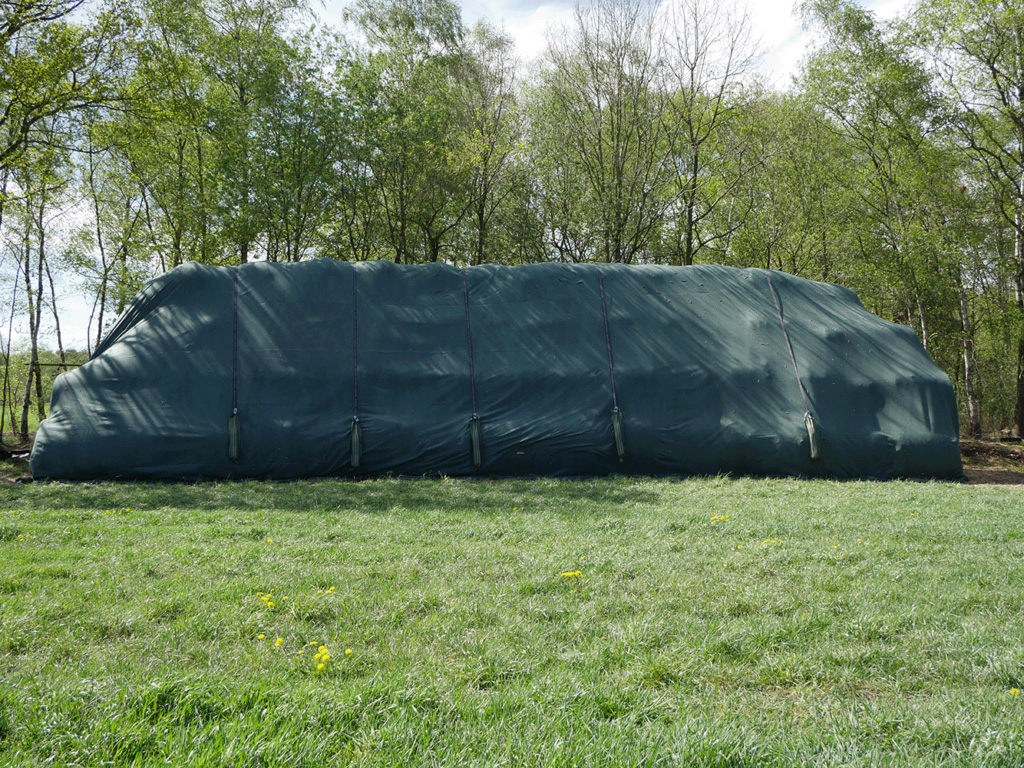
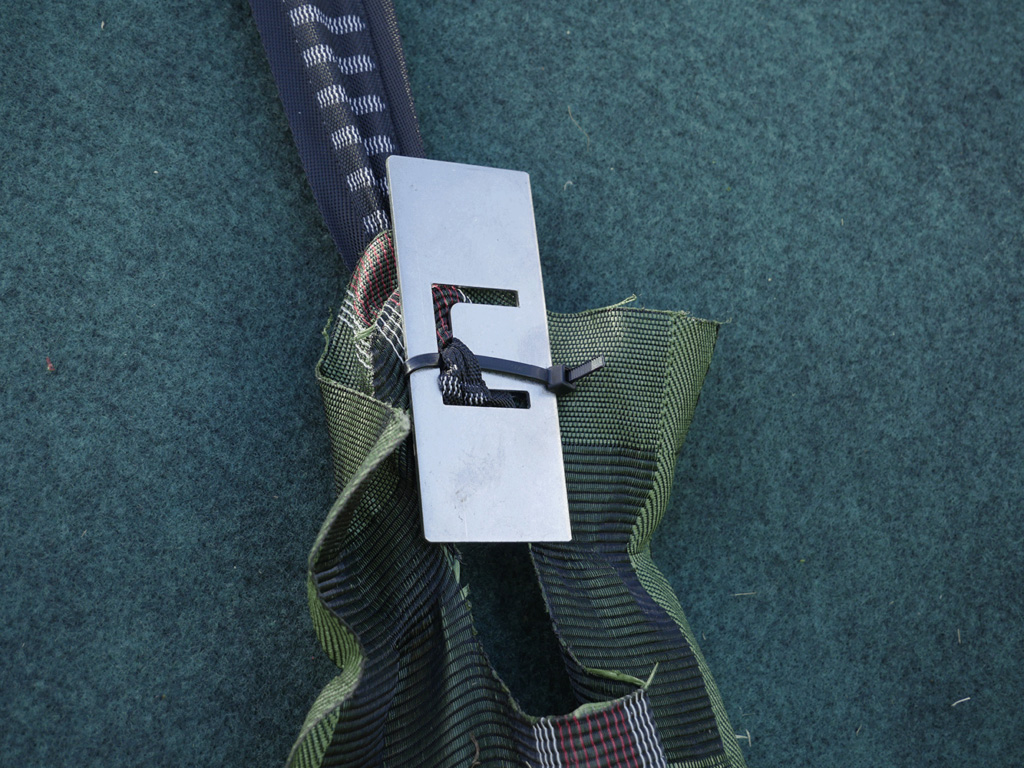
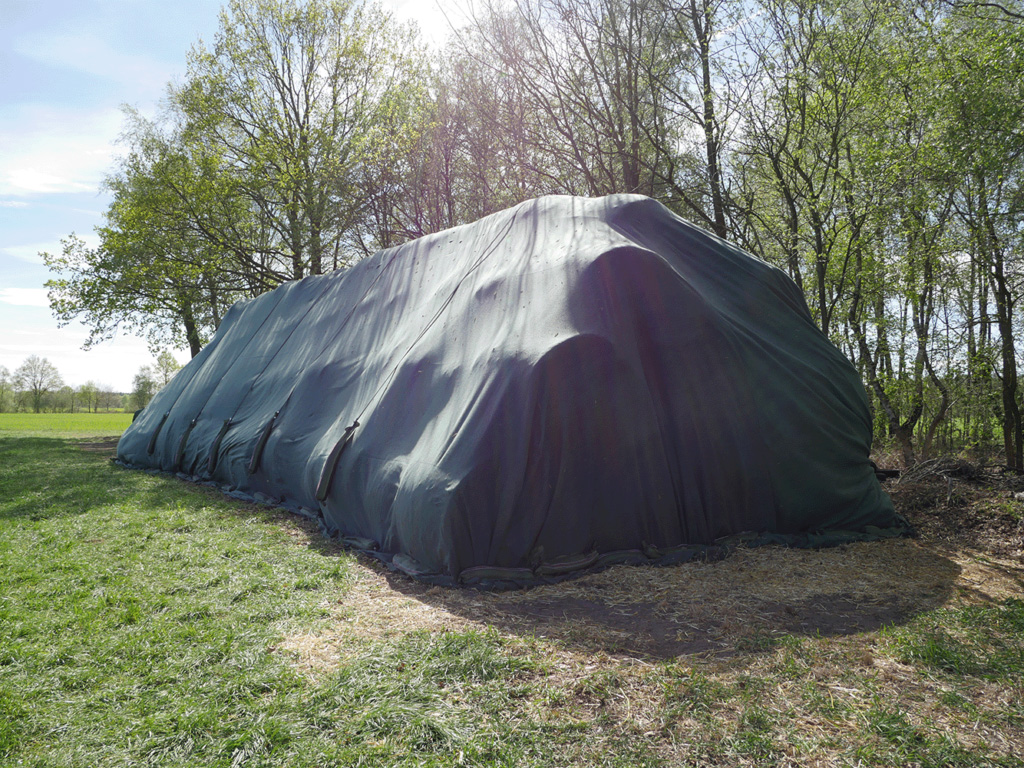
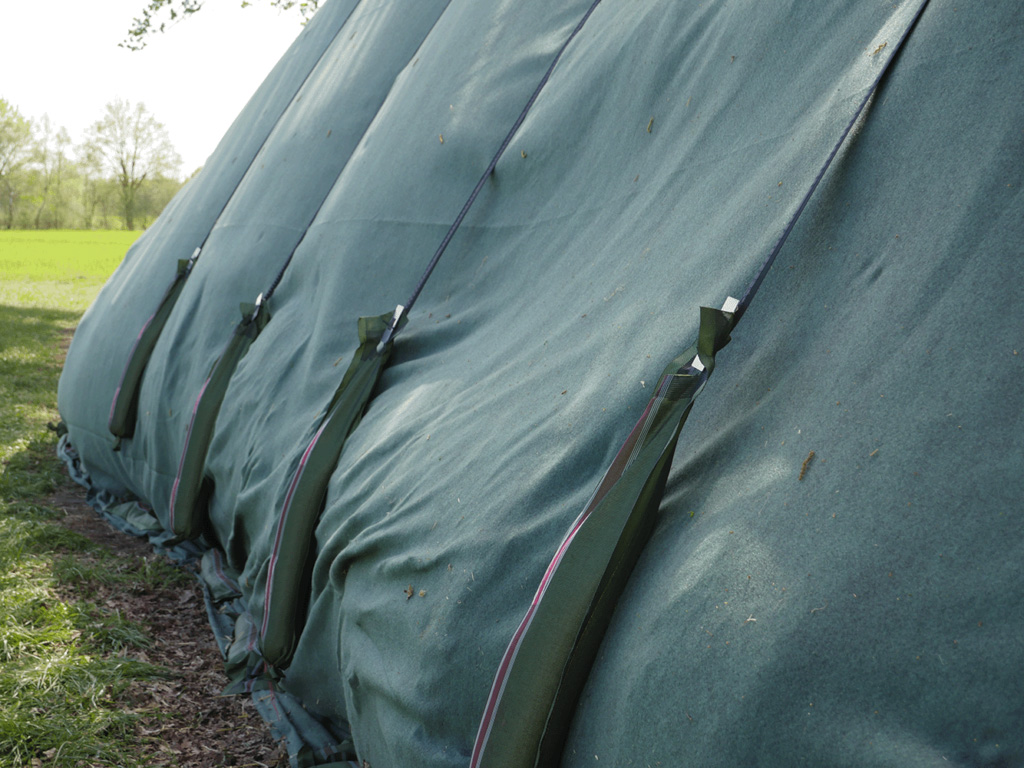
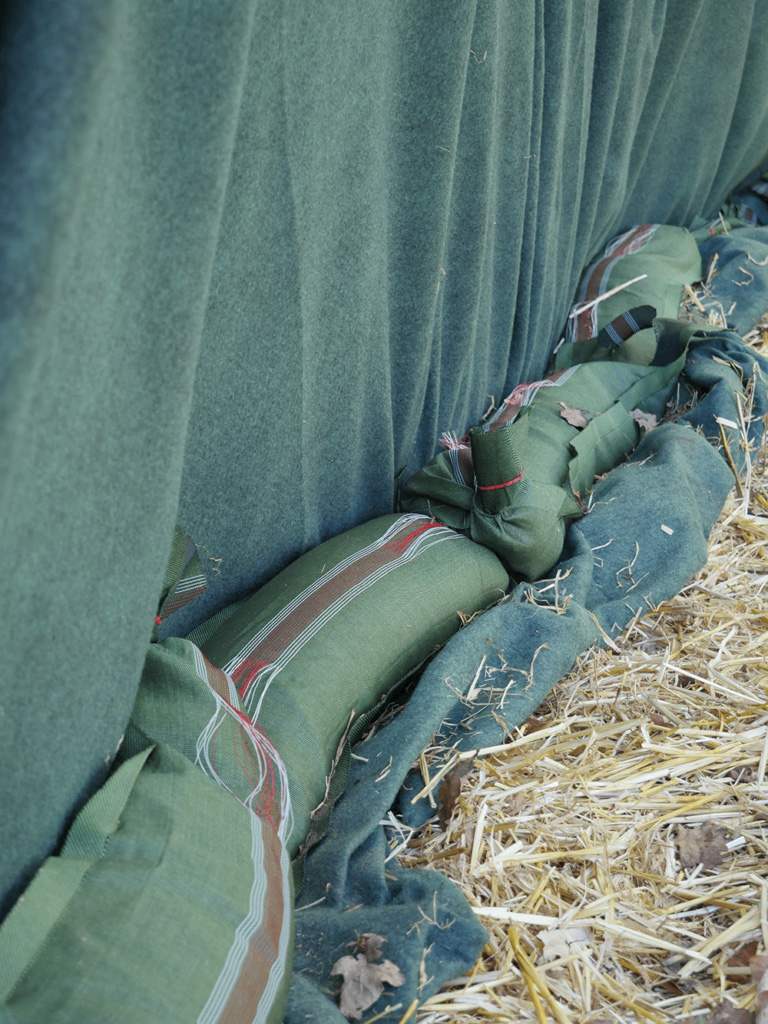
A straw stack covered with our protec premium straw fleece and the silo-safeline