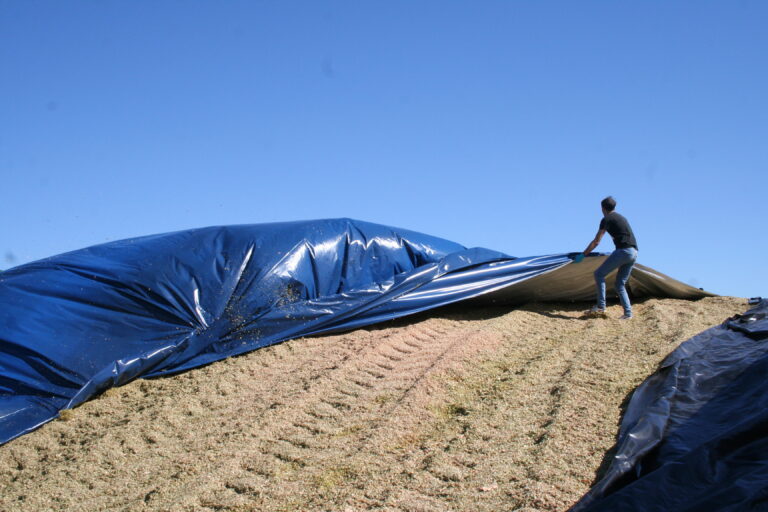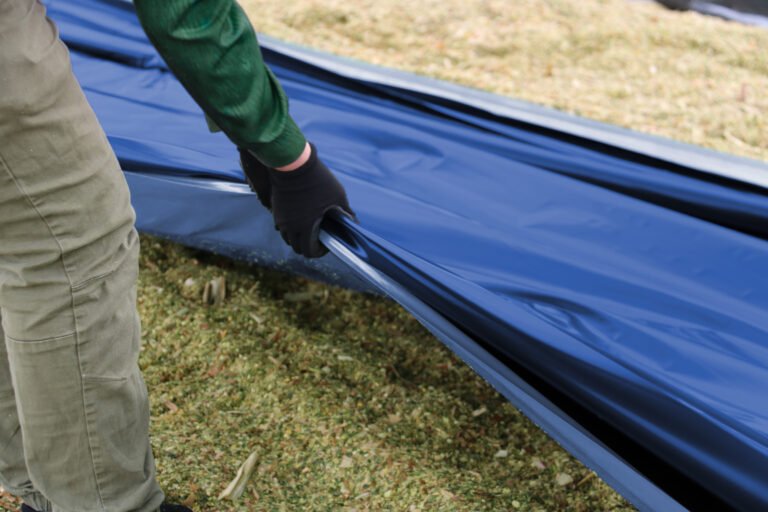


Is cover fleece the better alternative to silage protection netting?
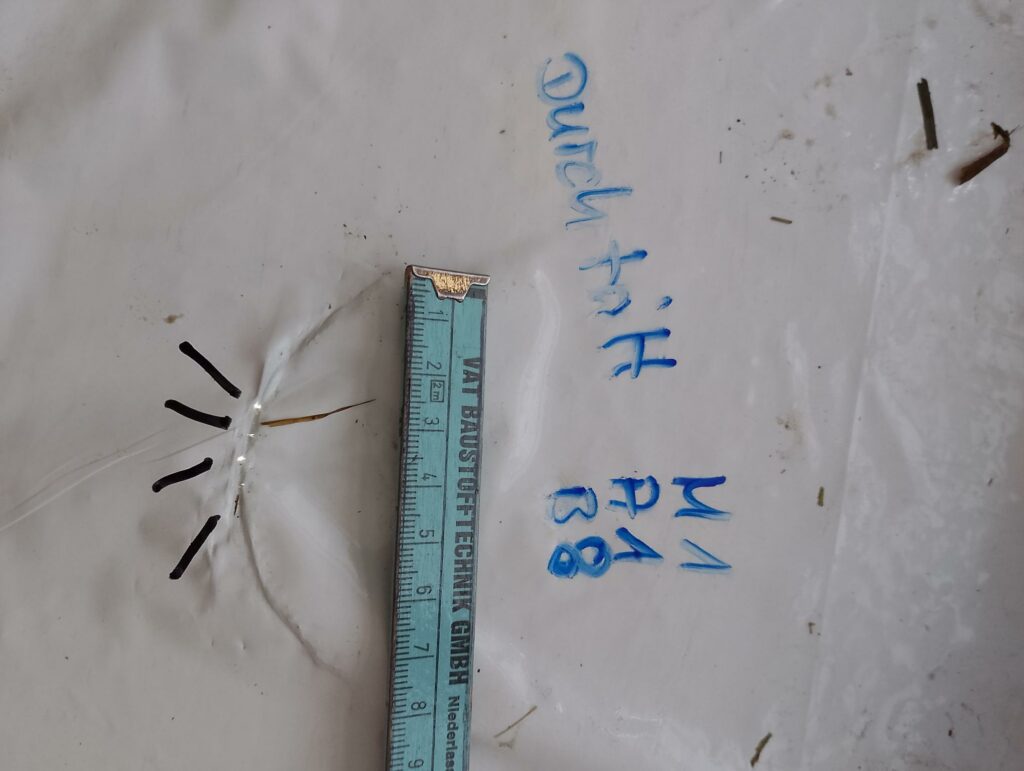
Does cover fleece provide the level of protection that silage protection netting is supposed to offer? In recent years, we have increasingly heard from customers that they had problems with mould and sometimes even water ingress in their silage, even though the silage film itself appeared completely intact. Because of this, we used our light table – a table that illuminates the film from below – to examine different silage films in more detail. After many samples of various films, one thing became clear: birds can easily penetrate even dense and heavy protection netting with their claws.
Is fleece the better alternative?
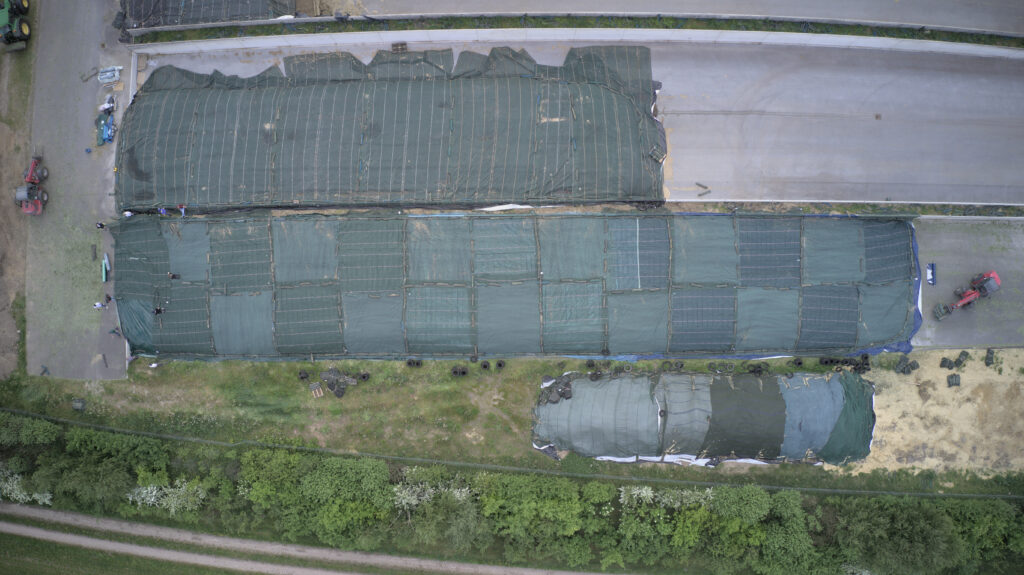
Once it became clear that protection nets are unreliable, we tested fleece as an alternative in practice. To make the results more visible, we installed our cover fleece and bird protection net on a full silo in a checkerboard pattern. We also set up a night vision camera next to the silo to see which animals actually move across the silage.
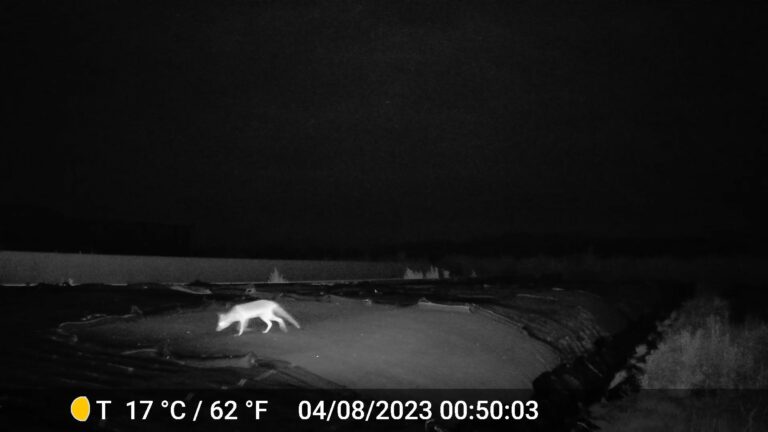
What does the trial show?
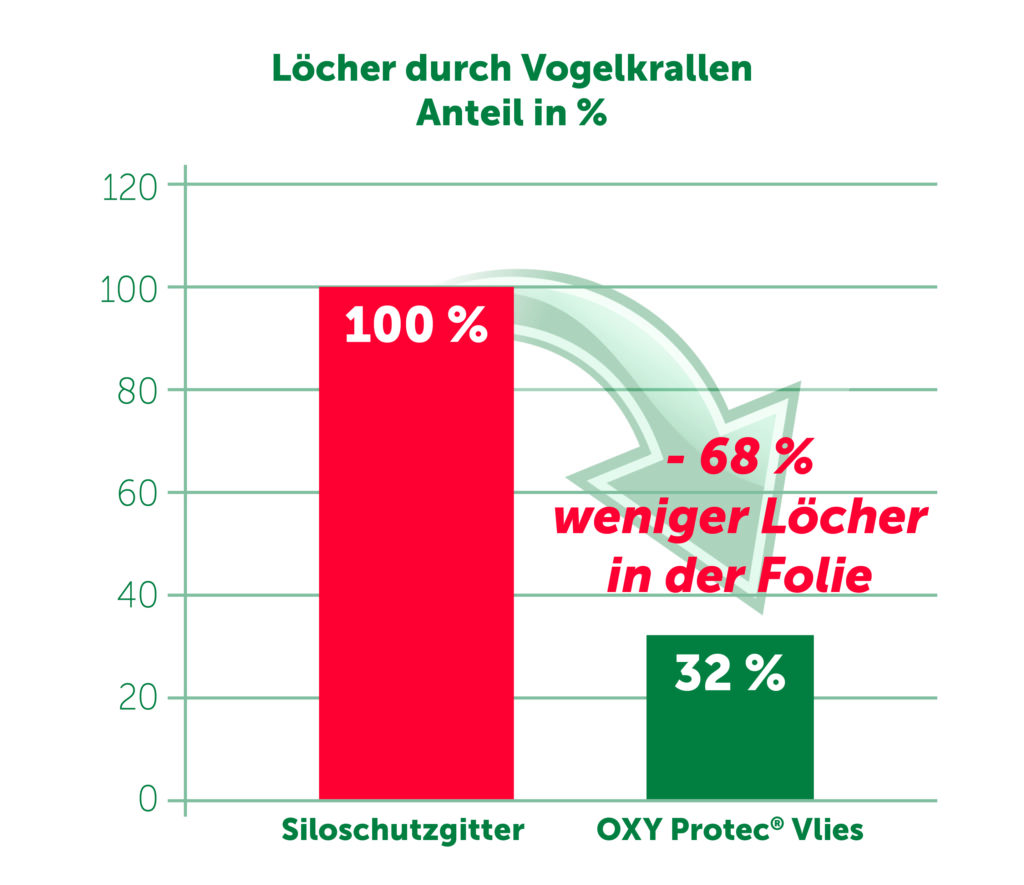
After examining the silage film, one thing became obvious: silage protection netting is far from the optimal protection for a silo with good silage film and a good silage additive. With our OXY Protec® cover fleece at 300 g/m², up to 68% fewer holes caused by bird claws and other animals were detected. Using a protective fleece gives you:
- fewer holes in your silage film caused by bird claws or similar
- a reusable, durable protection (UV-stable for 5 years)
- less mould and yeast growth in your silage
- less work due to reduced spoilage
So what is the final conclusion on fleece?
A perfect silage protection system with zero holes probably does not exist. Even with our fleece, not 100% of damage is prevented. That is why we recommend using silage protection netting plus fleece on top – this is always the safest option. However, even the best protection for your silage film is of little use if fermentation inside the silo does not work properly. What matters just as much is which silage film and which silage additive is used. The optimal combination of all three ensures excellent silage results.