

Estimated reading time: 2 minutes
More performance for your money
Anyone buying baler twine naturally pays attention to the price per kilogram and is often only satisfied once they have achieved a good price for a twine. If the twine then works during baling, everything seems fine.
Or maybe not!
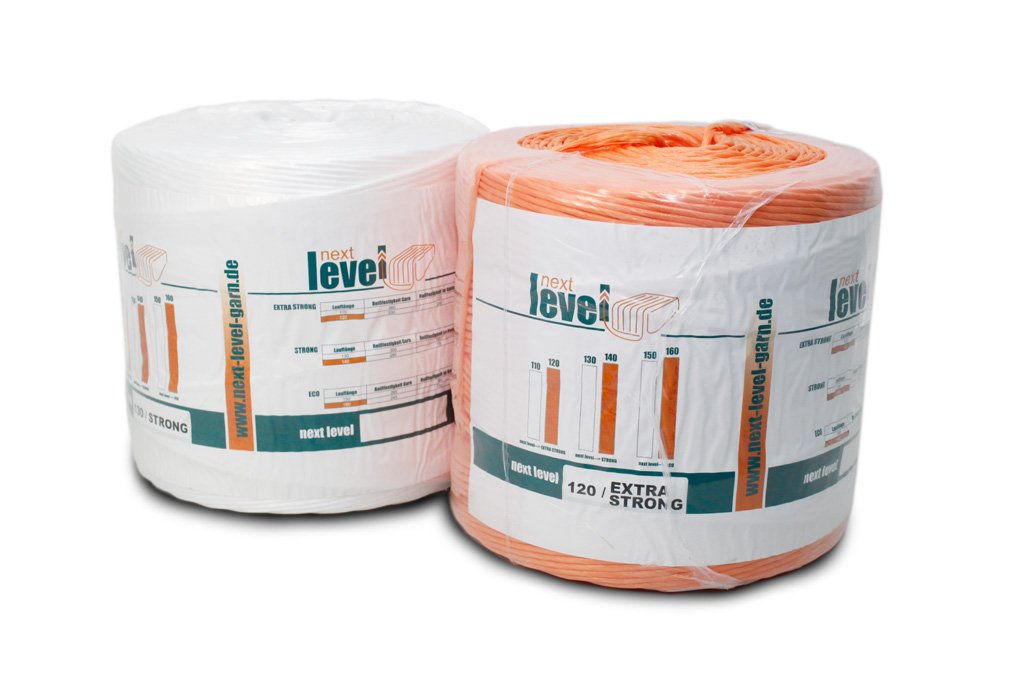
Many customers assume that specifications such as type 130/150 or simply 130/150 refer to the running length in meters per kilogram. However, this is often not the case at all. Specifications that do not clearly refer to the actual running length (m/kg) often have little to do with reality. The real running length in m/kg for such twines is usually far lower. For years, we at jbs have been dealing with these misleading claims and therefore promote our top-quality baler twines with the indication of “true running length.” In addition to the true running length, linear tensile strength plays a decisive role. The most economical combination is achieved when a high running length is combined with high tensile strength. Conversely, as you might expect, this is not particularly cost-effective, even if the twine appears inexpensive. For this reason, we have closely examined several competing products (see table).
We were quite surprised at how large the differences on the market are:

An example:
next level 130 (339 kg tensile strength): true length 130 m
130 A (333 kg tensile strength): true length 100 m
The difference is 30 m/kg – that’s a considerable 30%!