

Estimated reading time: 4 minutes
Don’t feel like reading? Then simply listen to this article.
Maize silage is more than just an energy source
The more energy-rich the maize silage, the better – that’s something you hear often. But in maize, energy doesn’t just come from the cob; a large part also comes from the rest of the plant. Ruminants are able to utilize carbohydrates from digestible plant cell walls. That’s exactly what makes them unique.
Fiber makes fat
Starch is generally highly digestible for cattle (over 95%), and there are only minor differences between maize varieties. So when looking at overall digestibility, the key factor is the fiber fractions of the remaining plant. The higher their digestibility, the more positive the effect on feed intake, rumen conditions, and milk fat synthesis.
The later the maize…
As the plant matures, maize stores more resistant starch in the cob. From 1 kg of resistant starch, about 30% more energy in the form of glucose is produced in the small intestine than from fermentation of more easily digestible starch in the rumen (where propionic acid is formed). However, in maize-heavy rations, resistant starch is not always beneficial—especially if grain maize is also included. The small intestine can only absorb around 1.5 kg of resistant starch per day. The rest is excreted and may even cause foaming in the slurry.
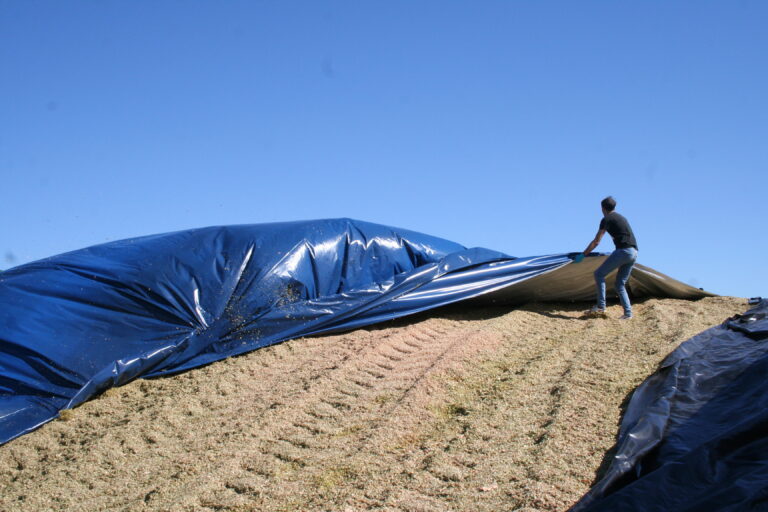
Foaming is often observed in autumn when feeding fresh maize silage. As storage time increases, starch becomes less resistant, and the foaming subsides. However, more starch then becomes available in the rumen. Attention: this can lower the rumen pH. That’s why silage analyses shouldn’t be done just once, but repeatedly during the feeding period so rations can be adjusted continuously.
Harvest strategically
By the time maize is harvested, analyses of grass silage are often already available. The ratio of grass to maize silage in the ration can then be estimated. Depending on yield and number of grass cuts, feeding may be balanced, grass-heavy, or maize-heavy. If plenty of highly digestible grass silage is available (21–24% crude fiber, around 5% residual sugar), maize mainly serves as an energy source.
Cutting height, variety, and harvest timing
Increasing cutting height raises the proportion of energy-rich cob and lowers crude fiber content. However, in very maize-heavy rations, it doesn’t make sense to aim only for high starch values. The digestibility of the rest of the plant is the decisive factor. The later the harvest, the poorer the fiber digestibility. Variety selection also plays a role, but trials have shown that harvest timing has a greater impact than variety choice.
The power of starch in the rumen
Microbial protein is the most valuable protein source for the cow. When plenty of energy is available in the rumen, microbes multiply, increasing the amount of microbial protein absorbed in the small intestine. However, this process is sensitive. Too many rapidly fermentable carbohydrates (starch and sugar) lead to excessive lactic acid production. The rumen becomes acidic, microbes die, and issues like hoof problems can follow.
Tune the rumen for fiber digestion
That’s why strengthening fiber digestion in the ration is so important. Fiber-degrading bacteria do not produce lactic acid and require a stable pH environment. Scientific studies show that these bacteria respond to certain live yeasts by increasing their metabolic activity and reproduction. The same applies to bacteria that break down lactic acid, helping prevent pH drops and acidosis.
Efficient use of roughage
Daily supplementation with such live yeasts in feeding trials led to a 40% higher overall fibre digestibility (NDF). In particular, the digestibility of the more difficult-to-digest cellulose fraction (ADF) increased significantly, by 77%. By the way, the same trial also included a feed group with sodium bicarbonate instead of live yeast.Daily supplementation with such live yeasts in feeding trials led to a 40% higher overall fibre digestibility (NDF). In particular, the digestibility of the more difficult-to-digest cellulose fraction (ADF) increased significantly, by 77%. By the way, the same trial also included a feed group with sodium bicarbonate instead of live yeast. However, in this group fibre digestibility could only be increased by about 30%. Live yeast simply does more.